
Author name: Akshaj Anand

Hospitals

Wood Works in Hospitals and Clinics

Designing and manufacturing hospital furniture for healthcare facilities in Saudi Arabia and Bahrain requires strict adherence to regional medical standards, including Saudi Arabia’s CBAHI (Central Board for Accreditation of Healthcare Institutions) and SFDA (Saudi Food and Drug Authority), as well as Bahrain’s NHRA (National Health Regulatory Authority). Beyond aesthetics, furniture in the GCC must endure a demanding climate of high heat and humidity while withstanding aggressive, hospital-grade chemical disinfectants and non-stop use. As the healthcare sector expands rapidly under initiatives like Saudi Vision 2030, procurement managers and hospital designers rely on manufacturers to deliver furniture that guarantees infection control, bariatric safety, and ergonomic comfort. Here is a comprehensive breakdown of the core materials and specialized furniture types required for modern Middle Eastern healthcare facilities. Designing and manufacturing hospital furniture for healthcare facilities in Saudi Arabia and Bahrain requires strict adherence to regional medical standards, including Saudi Arabia’s CBAHI (Central Board for Accreditation of Healthcare Institutions) and SFDA (Saudi Food and Drug Authority), as well as Bahrain’s NHRA (National Health Regulatory Authority).Beyond aesthetics, furniture in the GCC must endure a demanding climate of high heat and humidity while withstanding aggressive, hospital-grade chemical disinfectants and non-stop use. As the healthcare sector expands rapidly under initiatives like Saudi Vision 2030, procurement managers and hospital designers rely on manufacturers to deliver furniture that guarantees infection control, bariatric safety, and ergonomic comfort. Here is a comprehensive breakdown of the core materials and specialized furniture types required for modern Middle Eastern healthcare facilities. 1. Decoration & Waiting Area Furniture Hospital waiting areas, reception zones, and patient lounges are the first point of contact. This furniture must seamlessly blend welcoming, modern aesthetics with rigorous clinical cleanability. Requirements: High traffic demands seating with extreme tear resistance, zero porosity, and structural frames that accommodate bariatric weight capacities. Key Materials Used: 2. Patient Room & Utility Furniture Patient room furniture takes the most direct abuse from medical equipment, food spills, and rigorous sanitization. This category includes overbed tables, bedside cabinets, and patient wardrobes. Requirements: Surfaces must be completely moisture-proof, impact-resistant, and feature safe, rounded edges to prevent patient injury. Key Materials Used: 3. Specialized Clinical Furniture This category is completely exclusive to the functional delivery of healthcare. It includes crash carts, IV poles, medical trolleys, scrub sinks, and examination tables. Requirements: Absolute sterility, heavy load capacity, corrosion resistance, and mobility. Key Materials Used: Hospital Furniture Material Comparison For procurement managers aiming to meet strict GCC healthcare mandates, choosing the right surface and fabric is critical for passing inspections and reducing long-term replacement costs. Material Primary Hospital Application Key Advantages Maintenance & Durability Medical-Grade Vinyl Waiting room seating, exam tables Impermeable, high chemical resistance, antimicrobial Withstands daily bleach exposure; 500,000+ double rubs Compact Laminate Overbed tables, wet-area panels Extreme impact resistance, 100% moisture-proof Will not swell in high humidity; easily wiped clean Solid Surface (SMS) Nurse stations, surgical sinks Seamless, zero-porosity, mold-resistant Scratches can be buffed out; lifelong durability Stainless Steel 304/316 IV poles, crash carts, trays Rust-proof, extreme structural capacity Withstands industrial sterilization; practically indestructible Healthcare Polyurethane Lounge chairs, long-term seating Softer feel, breathable, antimicrobial Easy to clean; resists cracking better than lower-grade PVC By manufacturing with these verified, medical-grade materials, furniture suppliers can guarantee that facilities in Saudi Arabia and Bahrain not only pass strict CBAHI and NHRA audits but also provide a safe, healing environment for patients and a highly functional workspace for medical staff.
Uncategorized

Wooden Furniture In Kindergarten

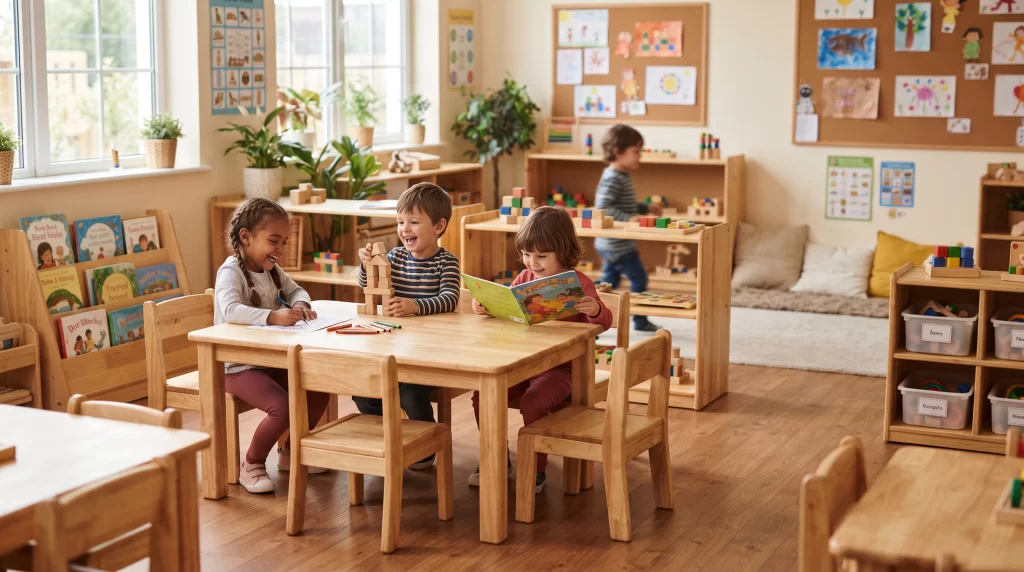
Kindergarten wooden furniture is specifically engineered for safety, child ergonomics, and heavy institutional wear, distinguishing it sharply from standard residential or office wooden furniture. Let me make a comparison table here so it will be easy for readers to understand Feature Kindergarten Wooden Furniture Standard Wooden Furniture Safety Standards Strictly rounded edges, zero sharp corners, anti-tip designs, and completely burr-free surfaces. Sharp linear edges, exposed metal hardware, or glass components are common. Finishes & Coatings 100% non-toxic, food-grade, water-based finishes (certified safe for children who chew on surfaces). Often uses chemical-heavy varnishes, polyurethane, or oil stains that emit VOCs. Ergonomics & Scale Proportionally scaled-down heights (e.g., tables 40–50 cm high) to support natural posture for kids aged 2–6. Designed for adult dimensions and standard counter or desk heights (75+ cm). Weight & Stability Engineered with a low center of gravity and flared legs to prevent tipping when children climb or lean on them. Balanced for adult use; tall items like bookshelves easily tip over if climbed. Durability & Care Made from high-grade ply or solid birch/beech wood with scratch-resistant, easy-wipe coatings for crayons and spills. Focuses on aesthetic grains; surfaces can be easily damaged by heavy moisture, markers, or impact. Top Woods Used in Kindergarten & Preschool Furniture Name of the Wood Why It Is Chosen for Kindergartens Why It Is Avoided in Standard/Adult Categories Baltic Birch Plywood Offers exceptional structural strength, unmatched warp resistance, and sands down to perfectly smooth, splinter-free edges. Lacks the traditional, dramatic wood grain patterns typically preferred for luxury home furniture. Rubberwood An eco-friendly, highly dense hardwood that naturally resists deep dents, scratches, and heavy impacts from toys. Less popular for high-end residential pieces due to its uniform, plain light-cream color and minimal grain texture. Beechwood & Maple Naturally shock-absorbent, completely odorless, and dense enough to hold heavy-duty screws securely over years of friction. Significantly more expensive than standard framing woods, making it less cost-effective for everyday adult furniture. Teak Wood Avoided in KGs: Extremely heavy (creates pinch/crush hazards if tipped) and prohibitively expensive for school budgets. Highly prized in home furniture for its premium look, natural weather-resistant oils, and lifetime durability. Sheesham (Indian Rosewood) Avoided in KGs: The sharp grain transitions can splinter along the edges under high impact, creating a skin-puncture risk. Widely chosen for home decor because of its beautiful, rich, contrasting dark and light grain variations. MDF & Particle Board Avoided in KGs: Easily swells and crumbles from spilled milk or juice, exposing dangerous internal chemical binders and resins. The top choice for budget home/office furniture due to its low cost and ease of flat-pack assembly. Pine Wood Avoided in KGs: It is too soft for commercial classrooms, meaning it dents easily and can secrete sticky natural sap. Heavily utilized in rustic home decor, temporary staging, and affordable DIY residential furniture. How a KG friendly Classroom looks like

The Complete Guide to the Types of Wood Used Today
Material Guides

The Complete Guide to the Types of Wood Used Today

The Complete Guide to the Types of Wood Used Today Wood is a timeless material, but selecting the right one for a new build can feel overwhelming. Whether you are commissioning a custom dining table or designing new cabinetry, understanding the types of wood used today is the first step to ensuring your project is both beautiful and durable. In this guide, the team at Gallant WW breaks down the most popular wood species, their unique characteristics, and what they are best suited for in modern woodworking. Hardwood vs. Softwood: What is the Difference? Before looking at specific wood species, it is important to understand the two main categories of timber available on the market. Note: The terms “hard” and “soft” refer to the tree’s reproduction method, not just its physical strength, though hardwoods do tend to be tougher! Top Hardwoods Used in Modern Woodworking When longevity and a premium finish are your top priorities, hardwoods are the ultimate choice for high-quality furniture. 1. Walnut Walnut is a massive favorite in modern design. Known for its rich, dark brown color and straight grain, it finishes beautifully and adds immediate elegance to any room. 2. Oak (Red and White) Oak is incredibly strong and resistant to daily wear and tear. White oak is particularly trendy right now due to its water resistance and sleek, light-toned aesthetic. Conversely, red oak offers a more traditional look with highly prominent grain patterns. 3. Maple If you need a highly durable surface that takes paint and stain exceptionally well, maple is a fantastic option. It features a smooth, fine grain and a creamy white color that fits perfectly into bright, contemporary spaces. Popular Softwoods You Should Know Softwoods are heavily utilized in both structural building and rustic furniture design because of their excellent workability. 1. Pine Pine is easily one of the most recognizable types of wood used today. It is lightweight, cost-effective, and features prominent knots that give it a cozy, rustic charm. Furthermore, it takes stain very easily. 2. Cedar Cedar is famous for its natural aromatic scent and its incredible resistance to moisture, rot, and insects. While it is a softer wood, it thrives when exposed to the elements. How to Choose the Right Wood for Your Project Selecting the right timber ultimately comes down to three simple questions: Bring Your Vision to Life with Gallant WW Choosing the right material is just the beginning of the journey. At Gallant WW, we specialize in turning high-quality timber into stunning, functional pieces designed to last a lifetime. Not sure which wood is right for your exact space? and let our team guide you in selecting the perfect materials for your next custom project!

Scroll to Top