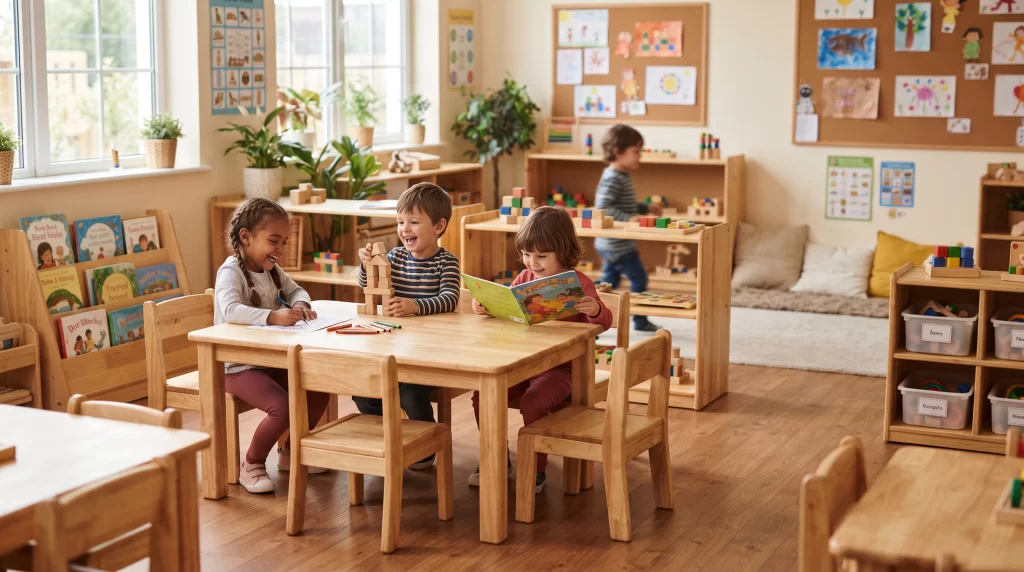
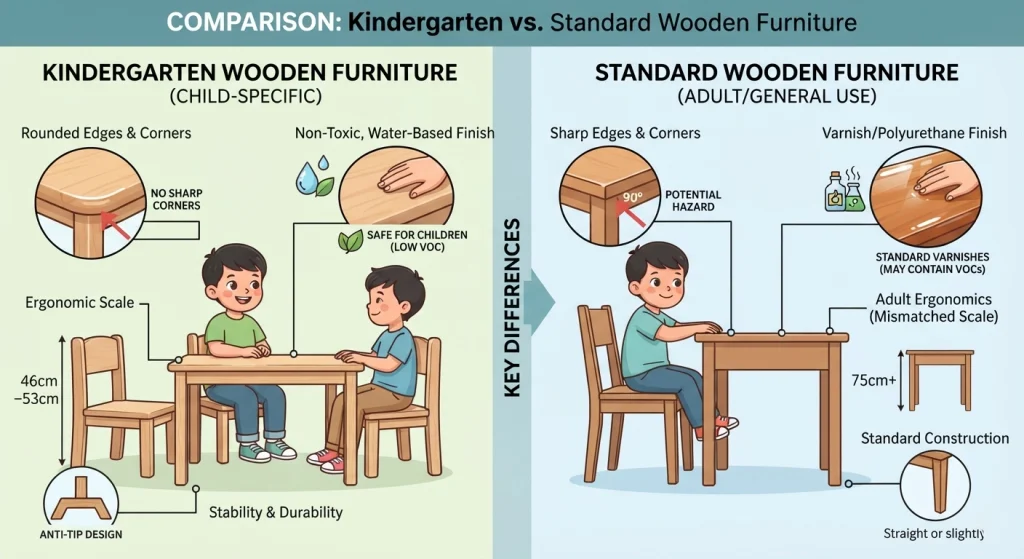
Kindergarten wooden furniture is specifically engineered for safety, child ergonomics, and heavy institutional wear, distinguishing it sharply from standard residential or office wooden furniture.
Let me make a comparison table here so it will be easy for readers to understand
| Feature | Kindergarten Wooden Furniture | Standard Wooden Furniture |
|---|---|---|
| Safety Standards | Strictly rounded edges, zero sharp corners, anti-tip designs, and completely burr-free surfaces. | Sharp linear edges, exposed metal hardware, or glass components are common. |
| Finishes & Coatings | 100% non-toxic, food-grade, water-based finishes (certified safe for children who chew on surfaces). | Often uses chemical-heavy varnishes, polyurethane, or oil stains that emit VOCs. |
| Ergonomics & Scale | Proportionally scaled-down heights (e.g., tables 40–50 cm high) to support natural posture for kids aged 2–6. | Designed for adult dimensions and standard counter or desk heights (75+ cm). |
| Weight & Stability | Engineered with a low center of gravity and flared legs to prevent tipping when children climb or lean on them. | Balanced for adult use; tall items like bookshelves easily tip over if climbed. |
| Durability & Care | Made from high-grade ply or solid birch/beech wood with scratch-resistant, easy-wipe coatings for crayons and spills. | Focuses on aesthetic grains; surfaces can be easily damaged by heavy moisture, markers, or impact. |
Top Woods Used in Kindergarten & Preschool Furniture
| Name of the Wood | Why It Is Chosen for Kindergartens | Why It Is Avoided in Standard/Adult Categories |
|---|---|---|
| Baltic Birch Plywood | Offers exceptional structural strength, unmatched warp resistance, and sands down to perfectly smooth, splinter-free edges. | Lacks the traditional, dramatic wood grain patterns typically preferred for luxury home furniture. |
| Rubberwood | An eco-friendly, highly dense hardwood that naturally resists deep dents, scratches, and heavy impacts from toys. | Less popular for high-end residential pieces due to its uniform, plain light-cream color and minimal grain texture. |
| Beechwood & Maple | Naturally shock-absorbent, completely odorless, and dense enough to hold heavy-duty screws securely over years of friction. | Significantly more expensive than standard framing woods, making it less cost-effective for everyday adult furniture. |
| Teak Wood | Avoided in KGs: Extremely heavy (creates pinch/crush hazards if tipped) and prohibitively expensive for school budgets. | Highly prized in home furniture for its premium look, natural weather-resistant oils, and lifetime durability. |
| Sheesham (Indian Rosewood) | Avoided in KGs: The sharp grain transitions can splinter along the edges under high impact, creating a skin-puncture risk. | Widely chosen for home decor because of its beautiful, rich, contrasting dark and light grain variations. |
| MDF & Particle Board | Avoided in KGs: Easily swells and crumbles from spilled milk or juice, exposing dangerous internal chemical binders and resins. | The top choice for budget home/office furniture due to its low cost and ease of flat-pack assembly. |
| Pine Wood | Avoided in KGs: It is too soft for commercial classrooms, meaning it dents easily and can secrete sticky natural sap. | Heavily utilized in rustic home decor, temporary staging, and affordable DIY residential furniture. |
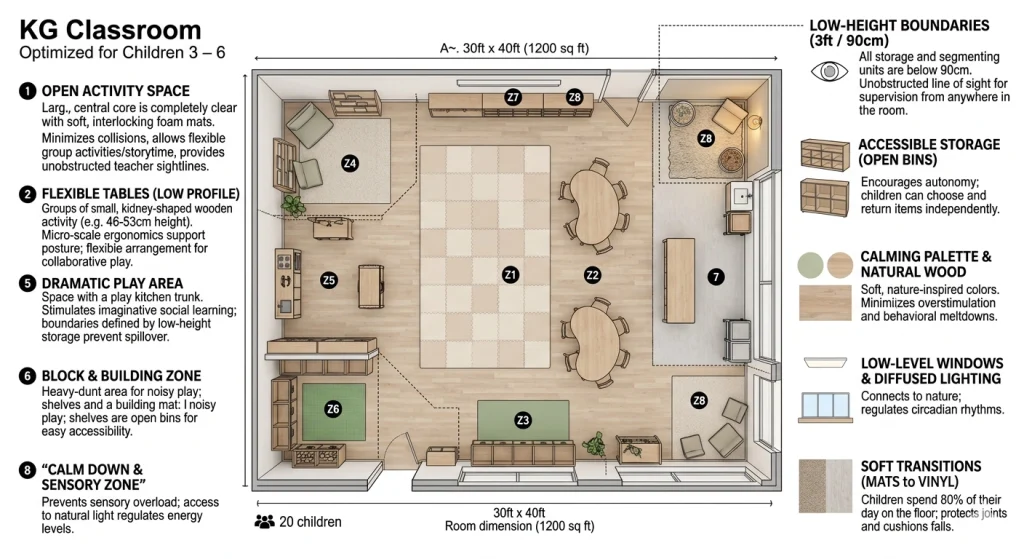
How a KG friendly Classroom looks like